Laueana Growing

Category: business

  • Regenerative gardening: winter schemes for spring dreams!

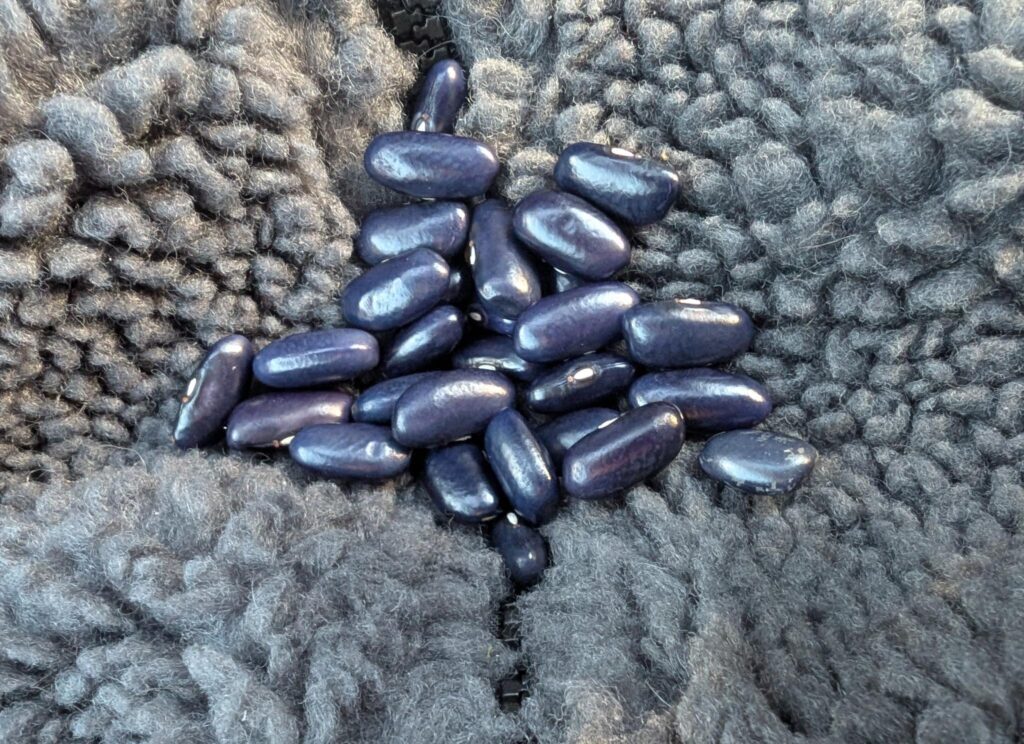
    A small pile of Sacre Bleu kidney beans. They are dark indigo in color. Beans are very important for regenerative gardening systems.

    Sacre Bleu kidney beans

    I haven’t started, let alone finished, my final vegetable review (but you can read part 1 and part 2). Yet, I started planning for some regenerative gardening this spring months ago! The months this frigid winter passed slowly and quickly all at once. I have wonderful news, at the end of it all: I’ve got my first client! He has me planning a multi-year garden installation, complete with annuals, perennials, and trees. With his permission, I am writing about my garden plans for him, and I will try to write about my own later. We aim to construct and plant the bed this spring. However, it is possible we will miss the timeline for spring planting, and only be able to do fall crops this year. We are planning on two garden beds, one with corn, squash, melons, and beans, and the other with peppers, potatoes, tomato, German chamomile, and Mexican mint marigold.

    The role of the “milpa,” or “three sisters,” in regenerative gardening

    I am planning on building a milpa, also known as “three sisters agriculture,” in my friend’s garden. This is a highly intelligent agriculture strategy designed by Native American people, which optimizes the harvest of three mutually beneficial crops: corn, squash, and beans. The catch is that a milpa cannot be machine harvested. Thus, it is not suitable for mass-scale industrial agriculture. “It takes five people four days to pick the beans and harvest the maize” (Landzettel, 2026).

    However, it is a sustainable and productive system that deserves a resurgence. The milpa has high value for food security gardening, because it increases the odds of survival of your crops under harsh conditions.
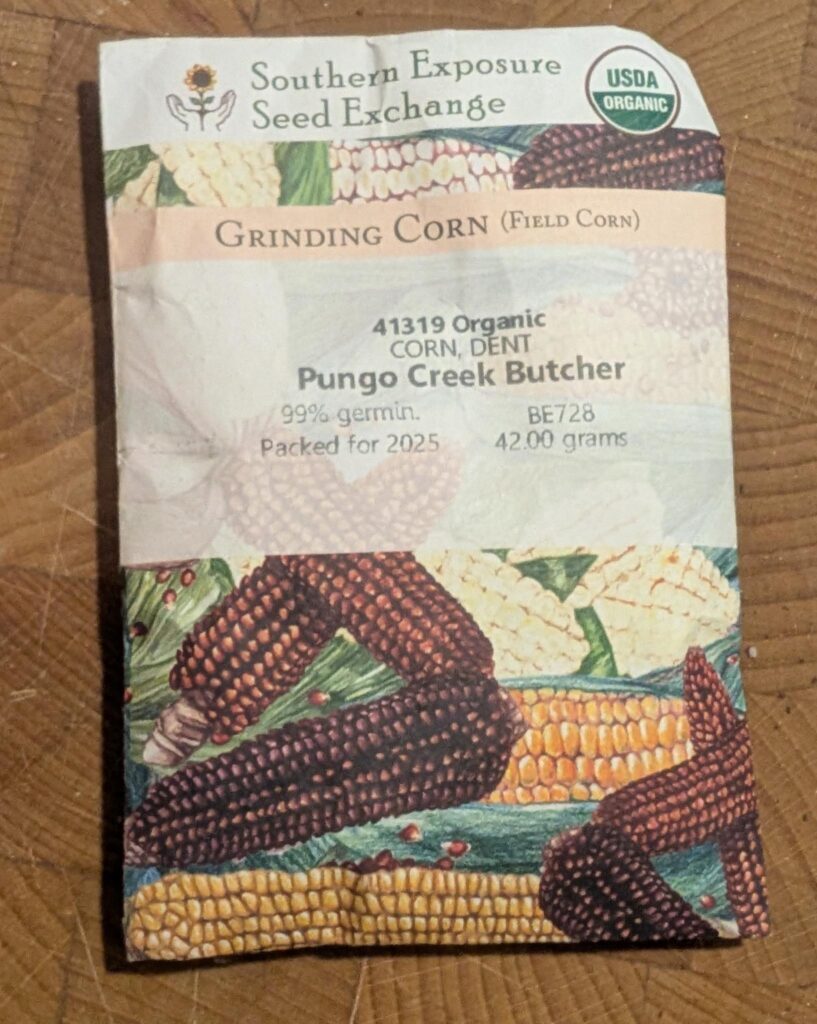
    Pungo Creek Butcher Dent Corn seed packet from Southern Exposure Seed Exchange. The seed packet has illustrations of yellow, orange, and red cobs of corn.

    Pungo Creek Butcher Dent Corn seed packet from Southern Exposure Seed Exchange

    In the milpa, each plant plays a role. The beans “fix” nitrogen from the air into the soil, where they and other plants use it as a macronutrient. The corn provides a pole for the beans to climb, and the squash shades the soil and reduces water evaporation with its large leaves (Landzettel, 2026;Kruse-Peeples & Marinaro 2016). These mutually beneficial interactions are what make the milpa so wildly resilient!

    A milpa can be built in multiple styles, using mounds or rows. Kruse-Peeples & Marinaro (2016) report that the traditional Iroquoian way to build a milpa is by making mounds, which we will emulate.

    There are also “other sisters” important to southwestern Native cultures, which can be grown in a milpa (Kruse-Peeples & Marinaro, 2016). For example, we will grow melons alongside our squash.

    Using lasagna mulching to build soil

    No-till and low-till techniques are important in regenerative gardening. We will use modified lasagna mulching to create two beds with 9 mounds each, in a square array. Lasagna mulching is layering carbon-rich and nitrogen-rich composting materials on top of existing soil (Rauter & Sherp, 2025). For our purposes, we will use finished compost between cardboard layers to create a mound scaffold. On top of this we will add a layer of coir-compost mixture so we can (hopefully) plant this year. We will also be inoculating the cardboard with oyster mushroom grain spawn to break down the cardboard more efficiently, and we will get a crop of lovely gourmet mushrooms out of it as well!
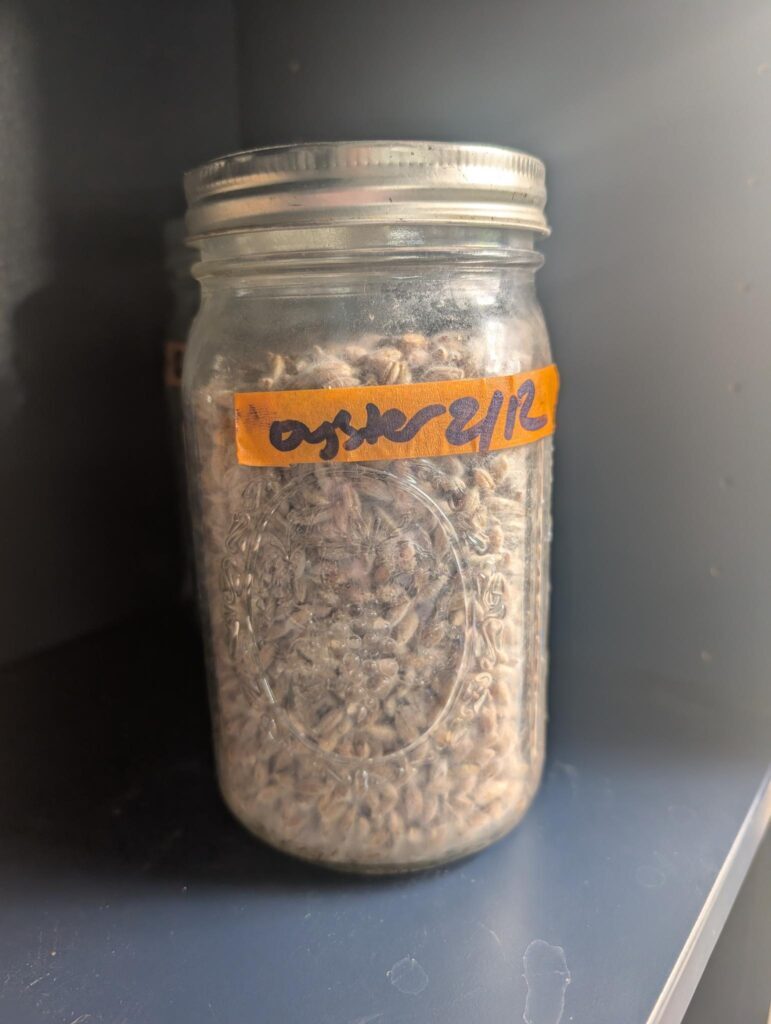
    Oyster mushroom grain spawn in a quart sized wide mouth mason jar. White oyster mushroom mycelium grows as a fuzz over rye grains.

    Oyster mushroom grain spawn

    Bibliography

    Landzettel, M. (2026, February 13). Milpa. How an Ancient Farming System Helps Small Farmers in Today’s Mexico. Slow Food. https://www.slowfood.com/blog-and-news/milpa-ancient-farming-system-mexico/

    Kruse-Peeples, M. & Marinaro, L. (2016, May 27). How to Grow a Three Sisters Garden. Native Seeds/SEARCH. Native Seeds/SEARCH. https://www.nativeseeds.org/blogs/blog-news/how-to-grow-a-three-sisters-garden

    Rauter, S. & Sherp, L. (2025). Sheet mulching and lasagna composting with cardboard. Oregon State University Extension Service. https://extension.oregonstate.edu/catalog/em-9559-sheet-mulching-lasagna-composting-cardboard
  • Carnivorous Plant Show

    I had an amazing time at the Mid Atlantic Carnivorous Plant Society’s inaugural 2025 carnivorous plant show at Haverford College in Lancaster, PA!

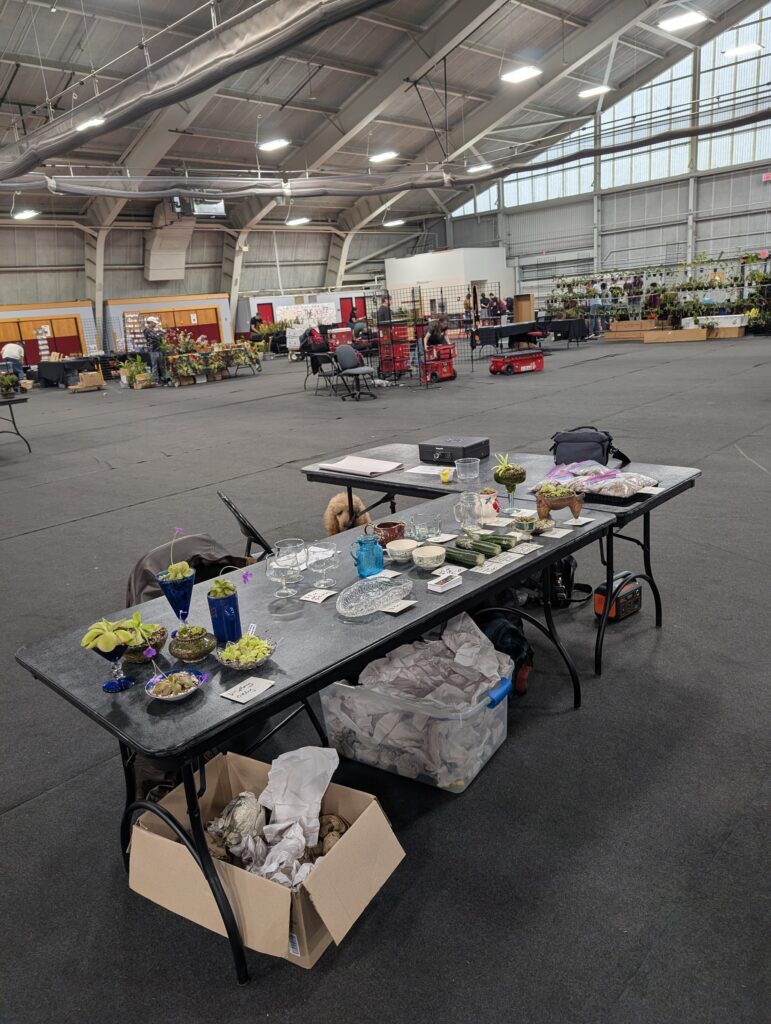
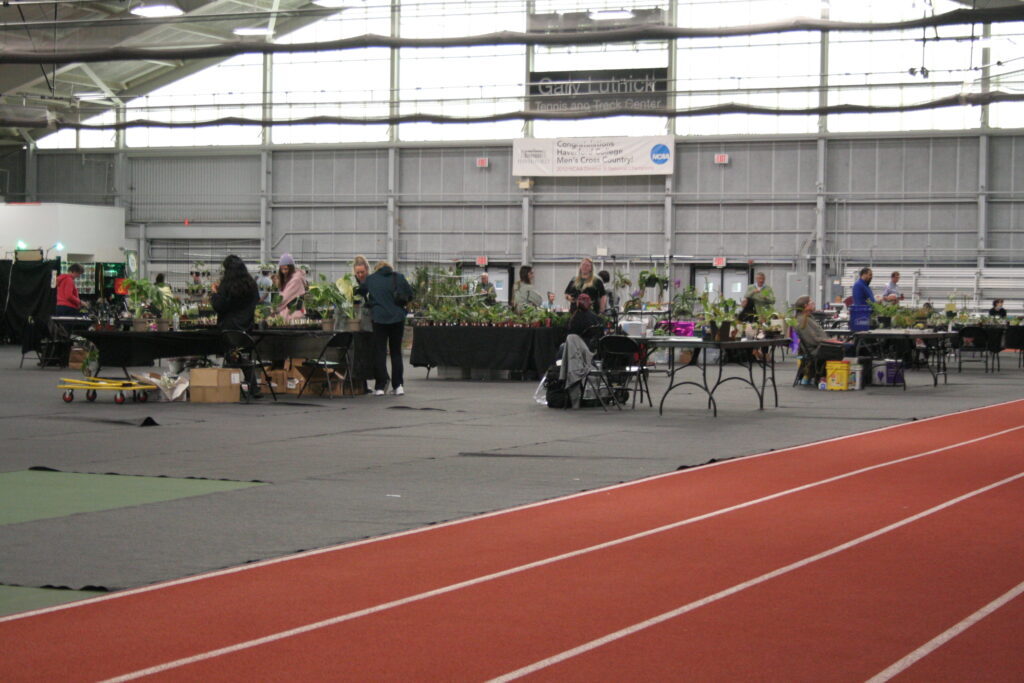
    Mid Atlantic Carnivorous Plant Society 2025 carnivorous plant show in the field house at Haverford College in Lancaster, Pennsylvania, USA. Vendors set up tables inside an indoor track arena.

    This was the first time I tabled as a vendor, and the first time I went to a carnivorous plant show. I had a wonderful experience and I am extremely grateful to MACPS for coordinating and hosting this event. There were about 300 people attending, enough for consistent engagement at my table but not overwhelming.

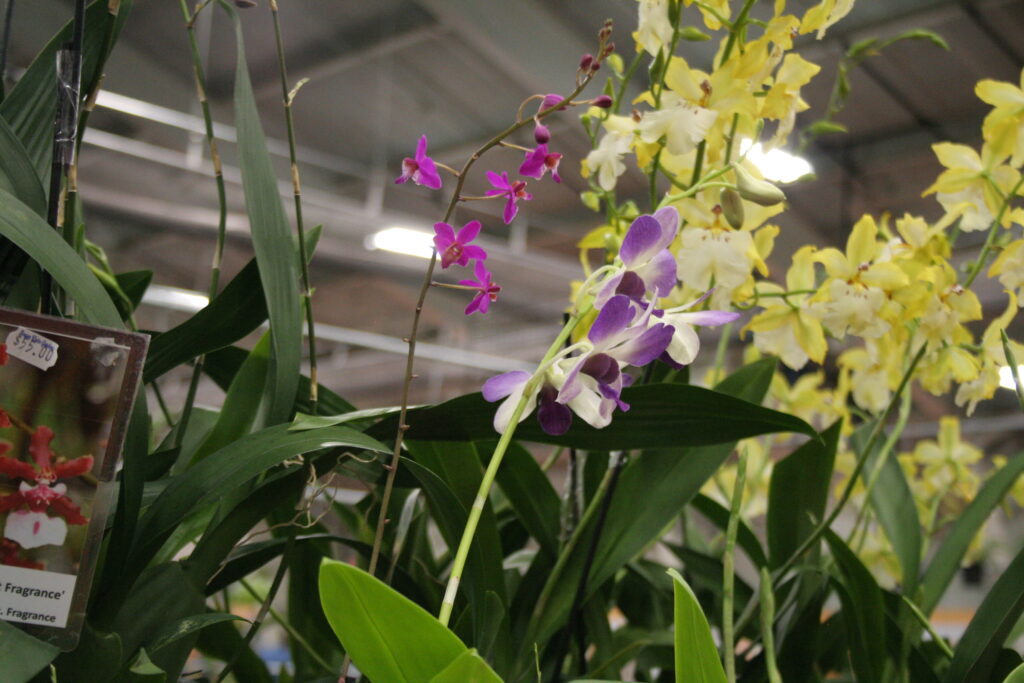
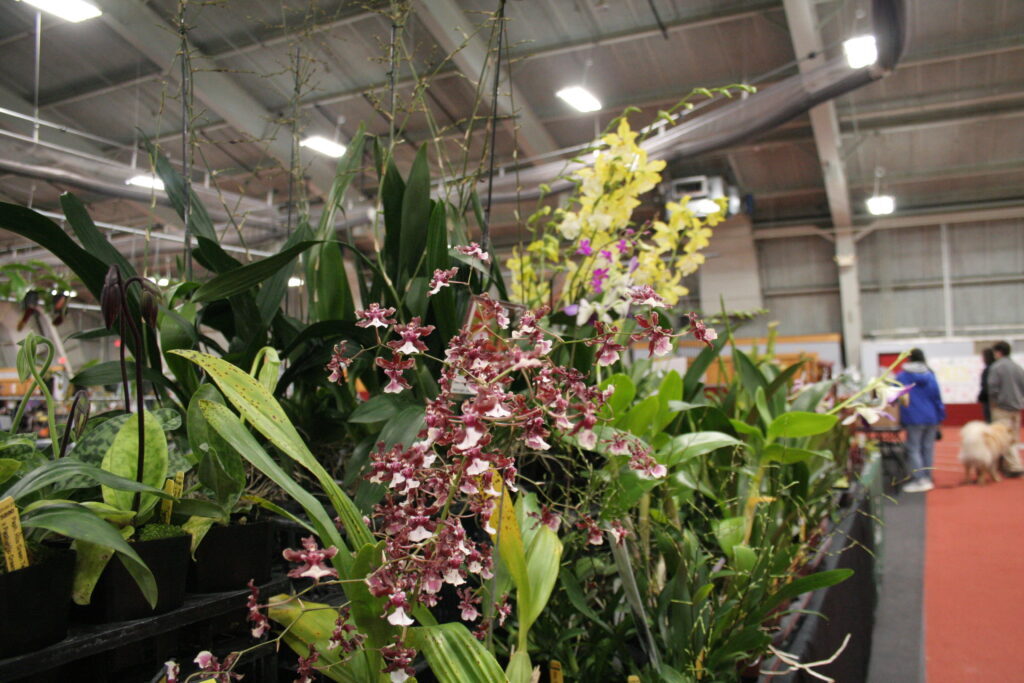
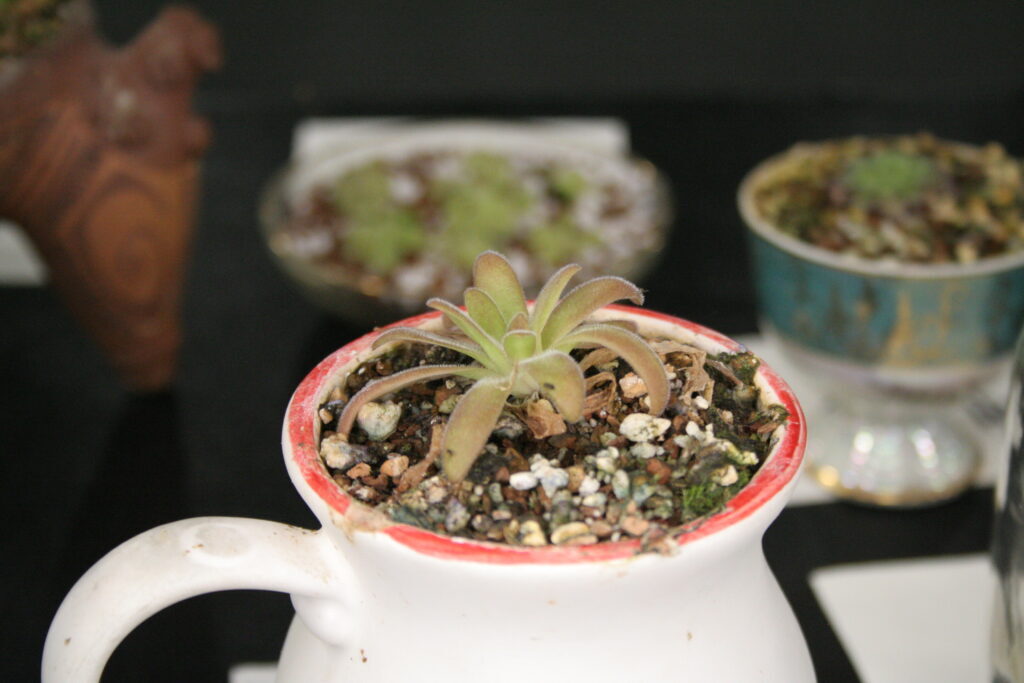
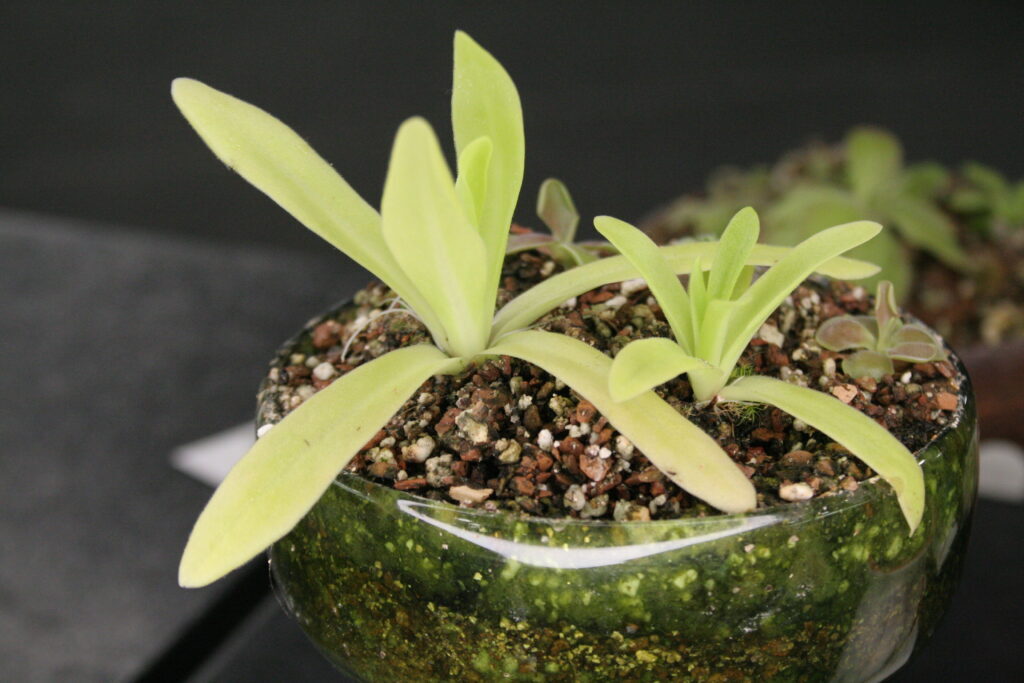
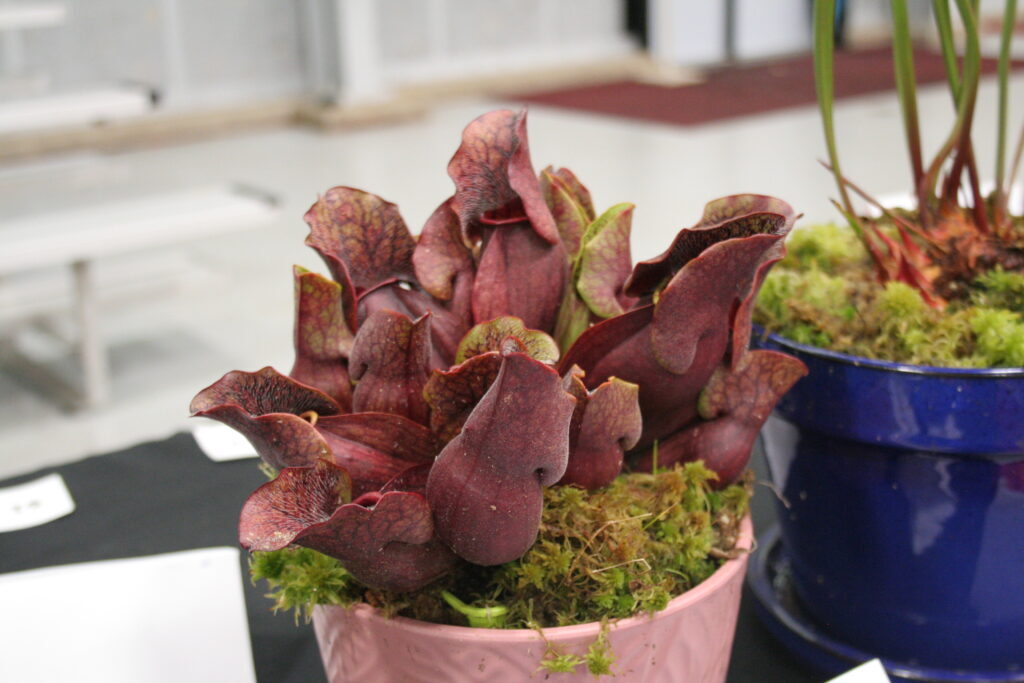
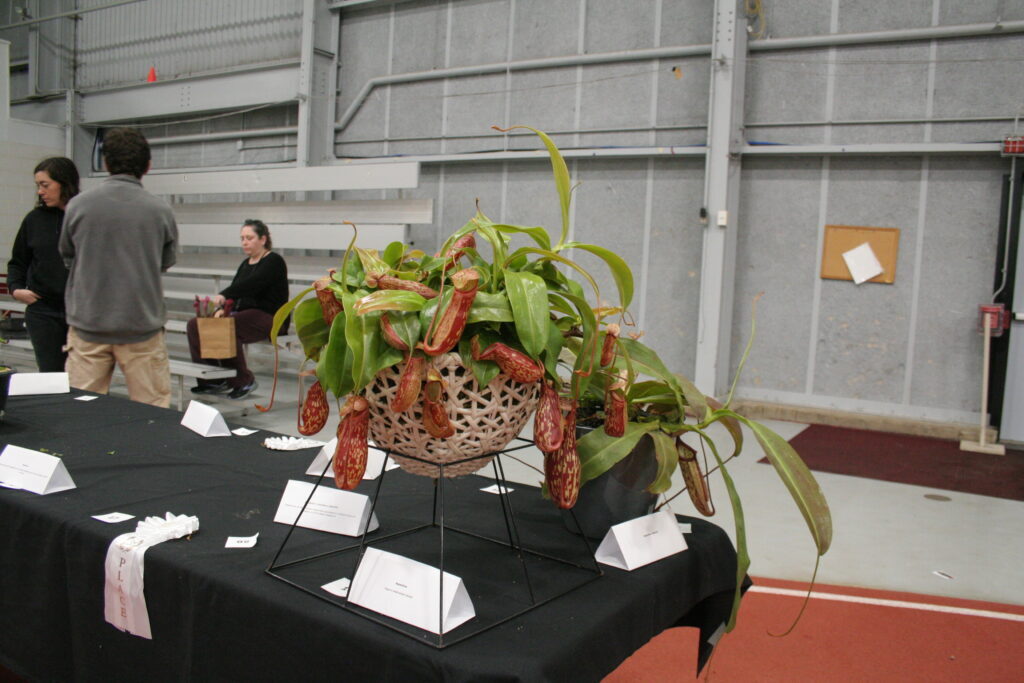
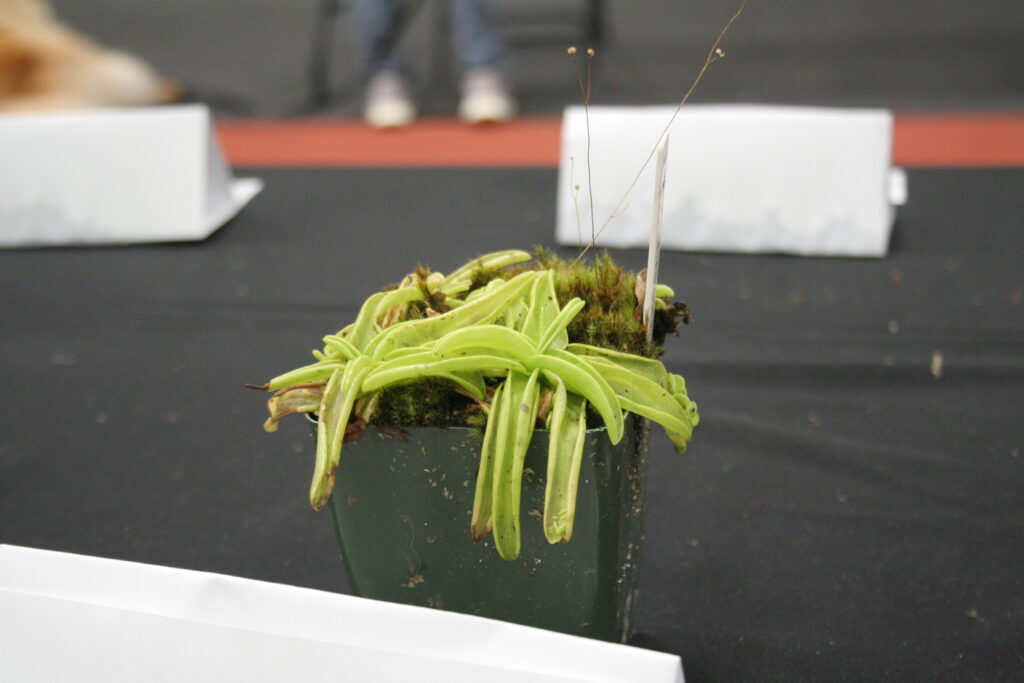
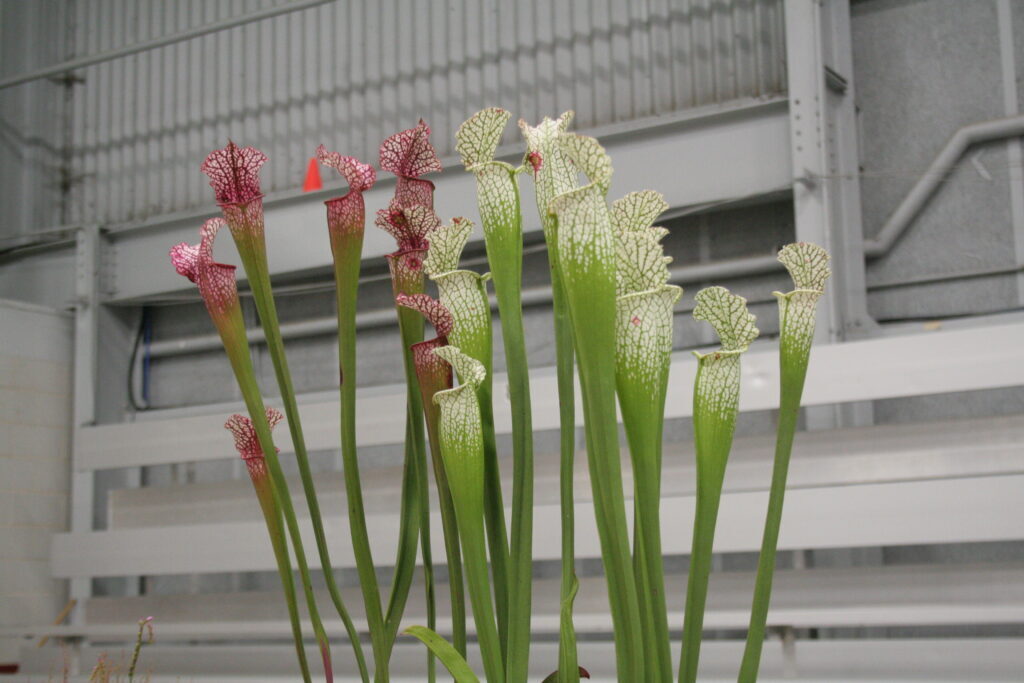
    I was one of about a dozen vendors there. Most had some kind of carnivorous plant, but a few had orchids and one even had bonsai trees. Sarracenia, or American pitcher plants, were very popular, as were Nepenthes, or tropical pitcher plants. Pinguicula were a small but distinct presence at many booths, and the star of the show at a few, counting myself.

    Two different types of Sarracenia side by side, both are tall but one is green and reddish and one is all green and white with no red.
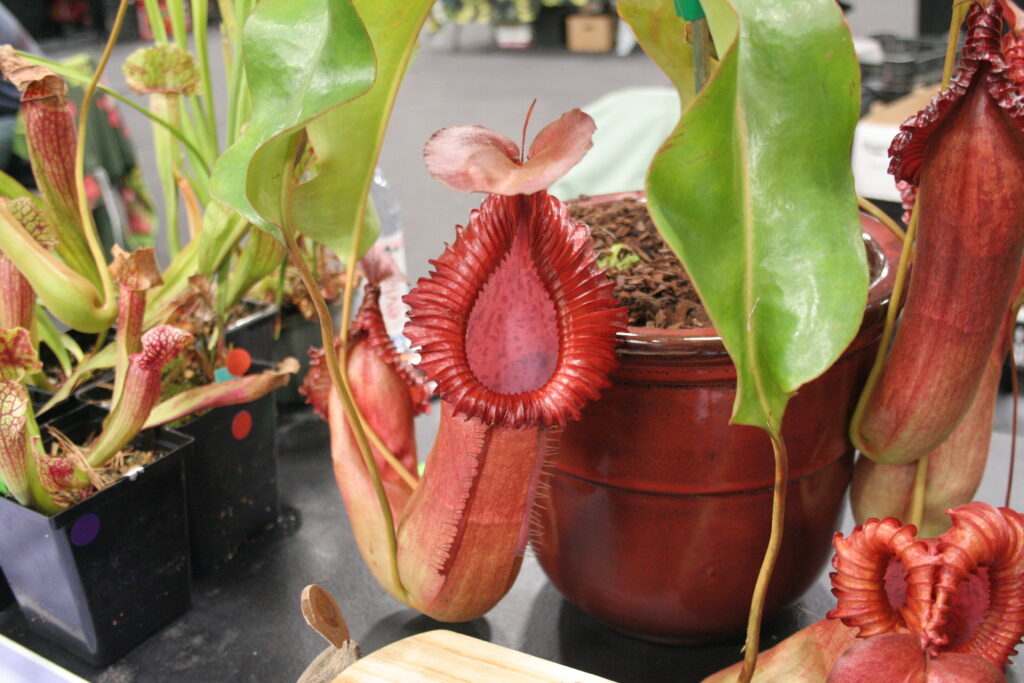
    A large Nepenthes or tropical pitcher plant pitcher at a carnivorous plant show

    About a month and a half before the show, a household cat got into my inventory and destroyed the majority of it. This sent me scrambling to put together arrangements to sell with extras from my surviving collection. I decided to sell ping soil and small, non-draining containers I thrifted, since pings can grow in those. I also had three Echinopsis cactus cuttings for sale, two of which were a complex hybrid from Prickocereus with monstrose growth forms.

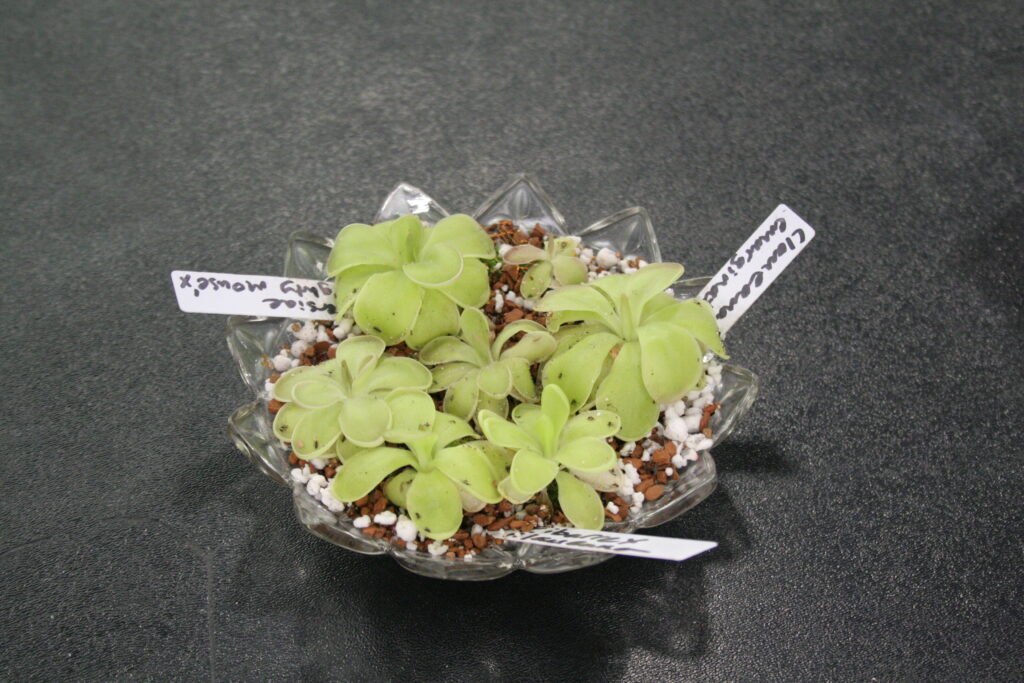
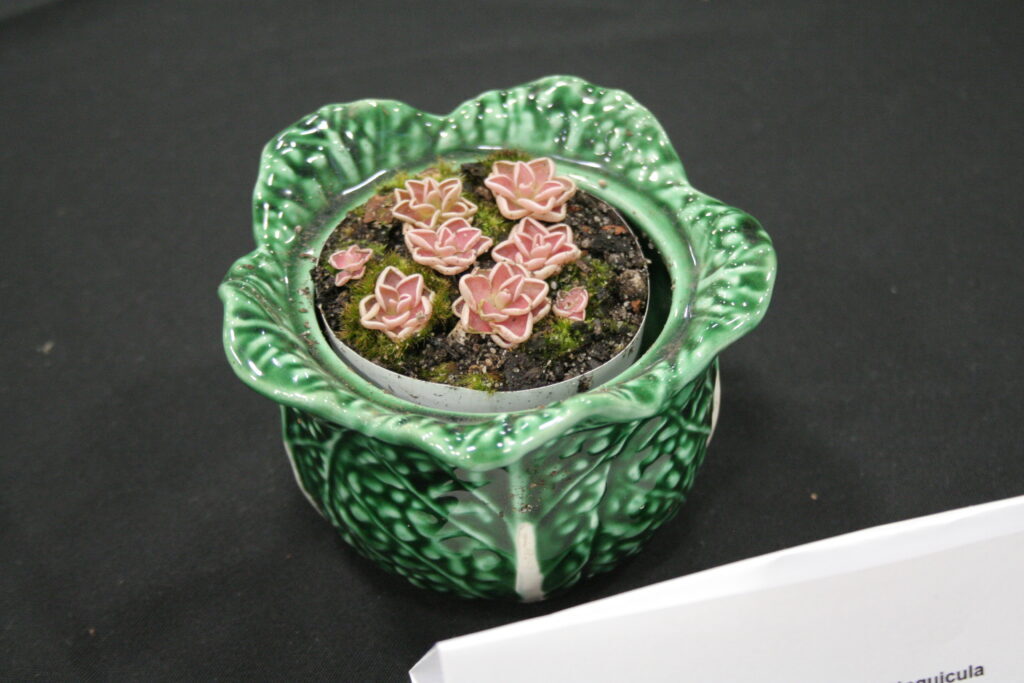
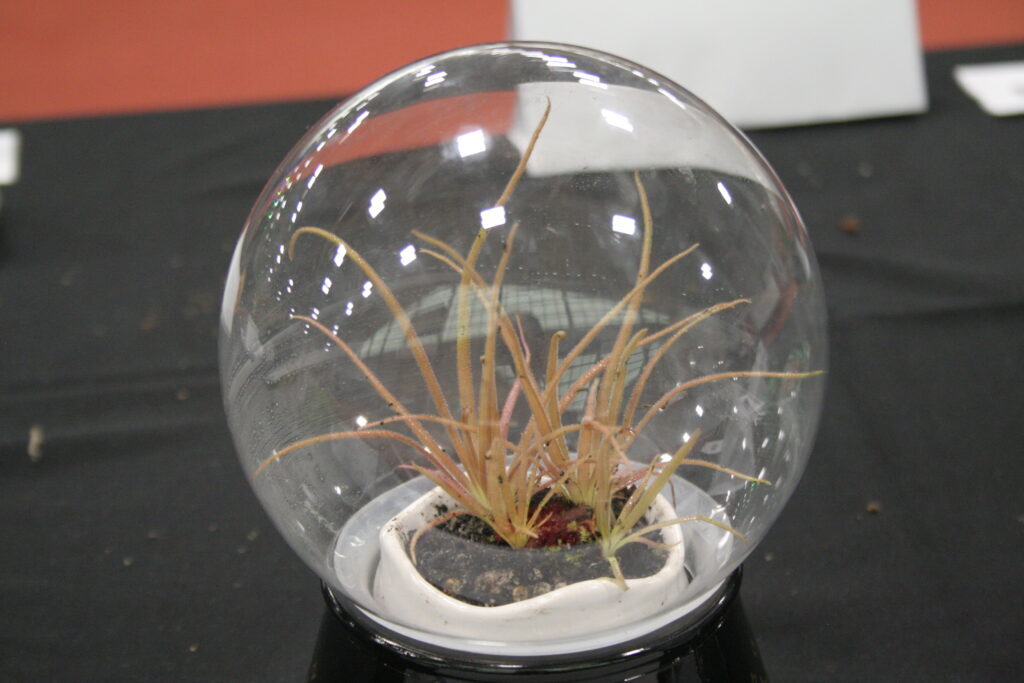
    In addition to items for sale, I presented several display items. The one I am most proud of is a small bonbon dish with three seed grown in-house hybrids (bottom image of next gallery). The plants in the dish are: P. moranensis ‘Kewensis’ x P. ‘Seductora,’ P. laueana x P. ibarre, and P. laueana “Red” x P. ehlersiae “Mighty Mouse.”

    The following gallery is of my table, my items for sale, and my items on display.

    My table at the carnivorous plant show with arrangements and items for sale plus containers. My dog's head pokes out from behind the table and there are other tables in the background.
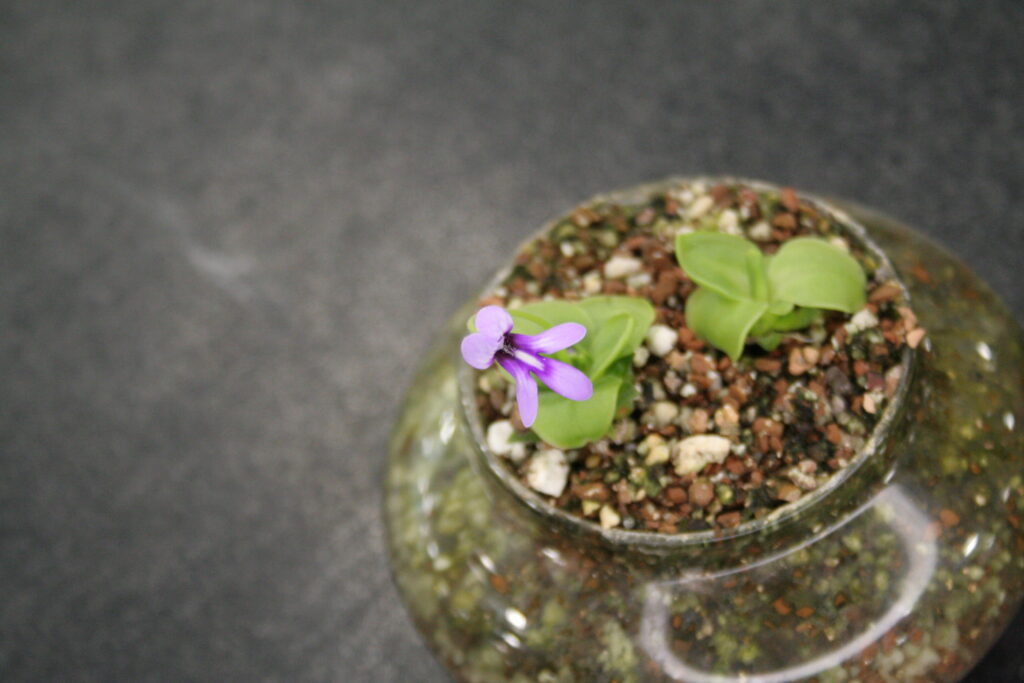
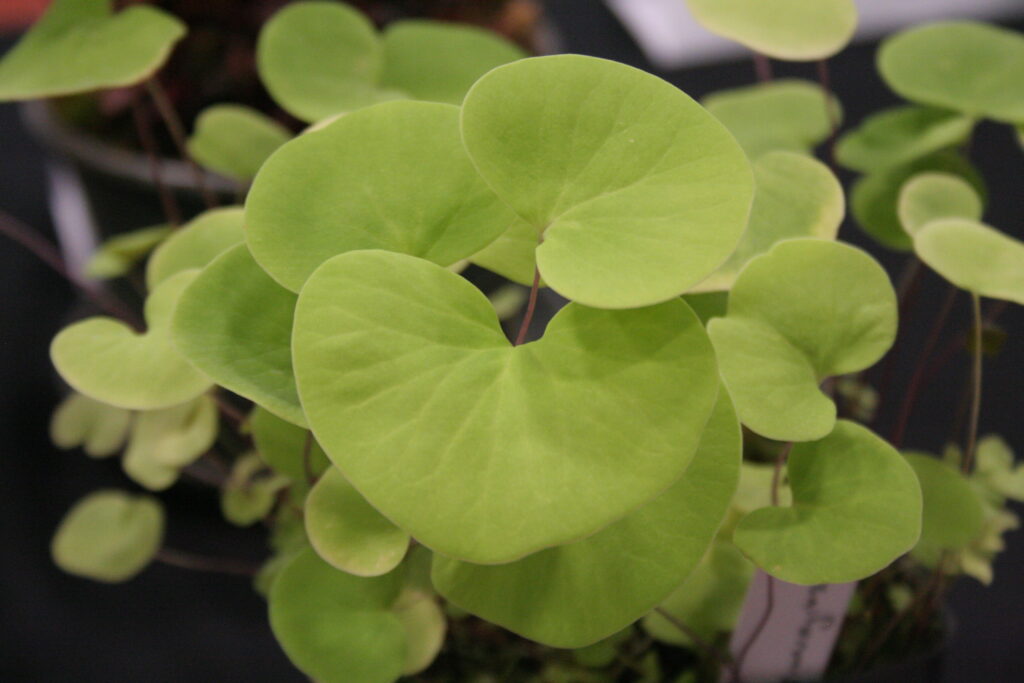
    A carnivorous plant arrangement with Pinguicula macrophylla in flower. The flower is purple with five petals and a cream/white throat spot.
    A carnivorous plant arrangement in a bonbon dish featuring three in house  by Laueana Growing seed grown Pinguicula hybrids.

    To my surprise, my best selling item was my ping soil. It is just turface, perlite, and some vermiculite. Most carnivorous plants prefer peat perlite mix, but tropical pings are lithophytes, or plants that grow on rocks. They much prefer sandy, rocky soil.

    I also sold a few containers, one small ping arrangement, and one cactus cutting. Overall, I think I did well. I will definitely come back!

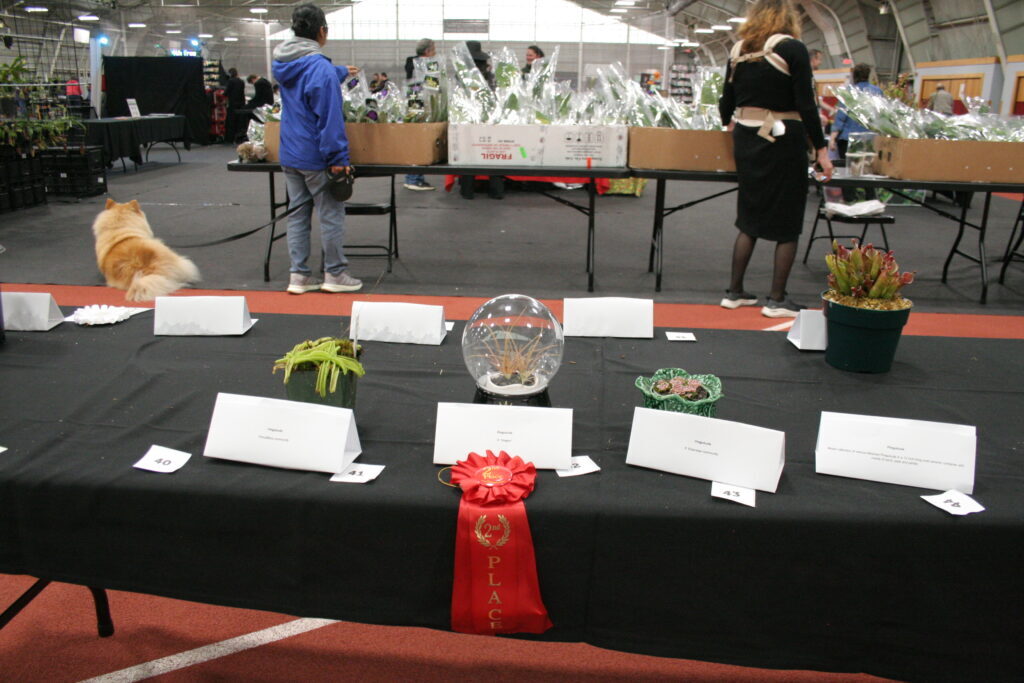
    The next gallery is of plants at the carnivorous plant show display tables.

    A carnivorous plant arrangement featuring pink Pinguicula ehlersiae
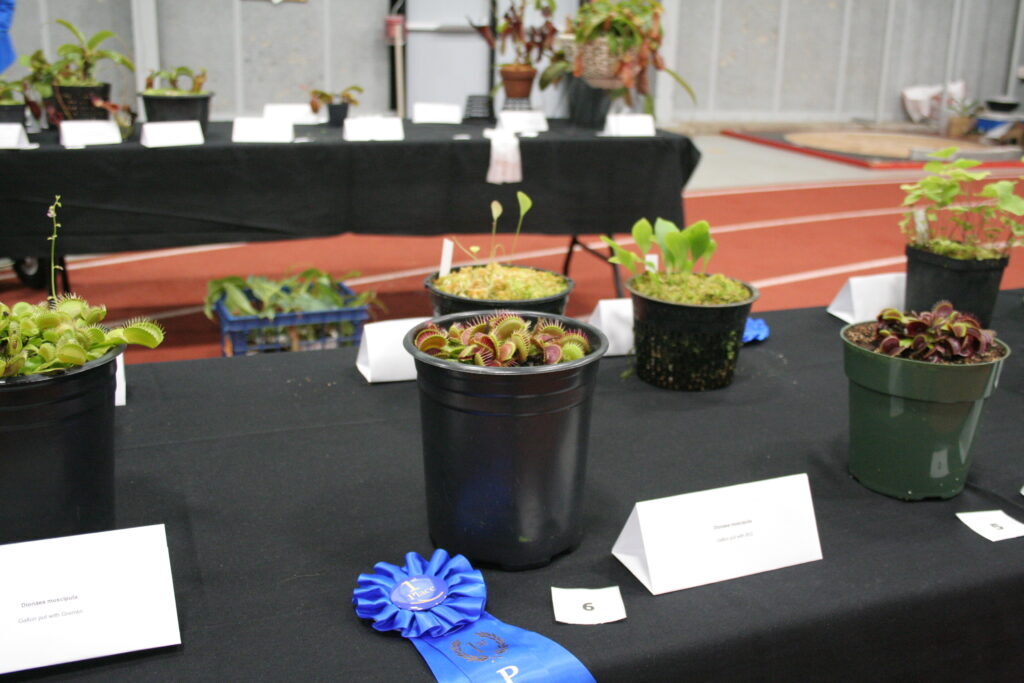
    Blue ribbon winning Dionaea (venus fly trap)
  • Plant show was totally awesome!

    I had an amazing time at the MACPS 2025 plant show! I sold a few items and handed out literally all of my business cards. I have tons of pictures to go through so stay tuned for updates on that!

  • Business updates and upcoming sales event

    It has been a little while since I have written a blog post. I started this project due to inability to work a regular job due to chronic illness. Unfortunately for me, sometimes it even prevents me from working flexibly for myself. However, I will persist. I am likely going to scale back from aiming to do horticulture AND mycology comercially, to just horticulture, while keeping mycology as a casual hobby for now. I have one item of excellent news: I will be tabling as a vendor for the first time at the Mid Atlantic Carnivorous Plant Society show on October 11 in Haverford, Pennsylvania!