Laueana Growing

Category: Uncategorized

  • Springing into Action

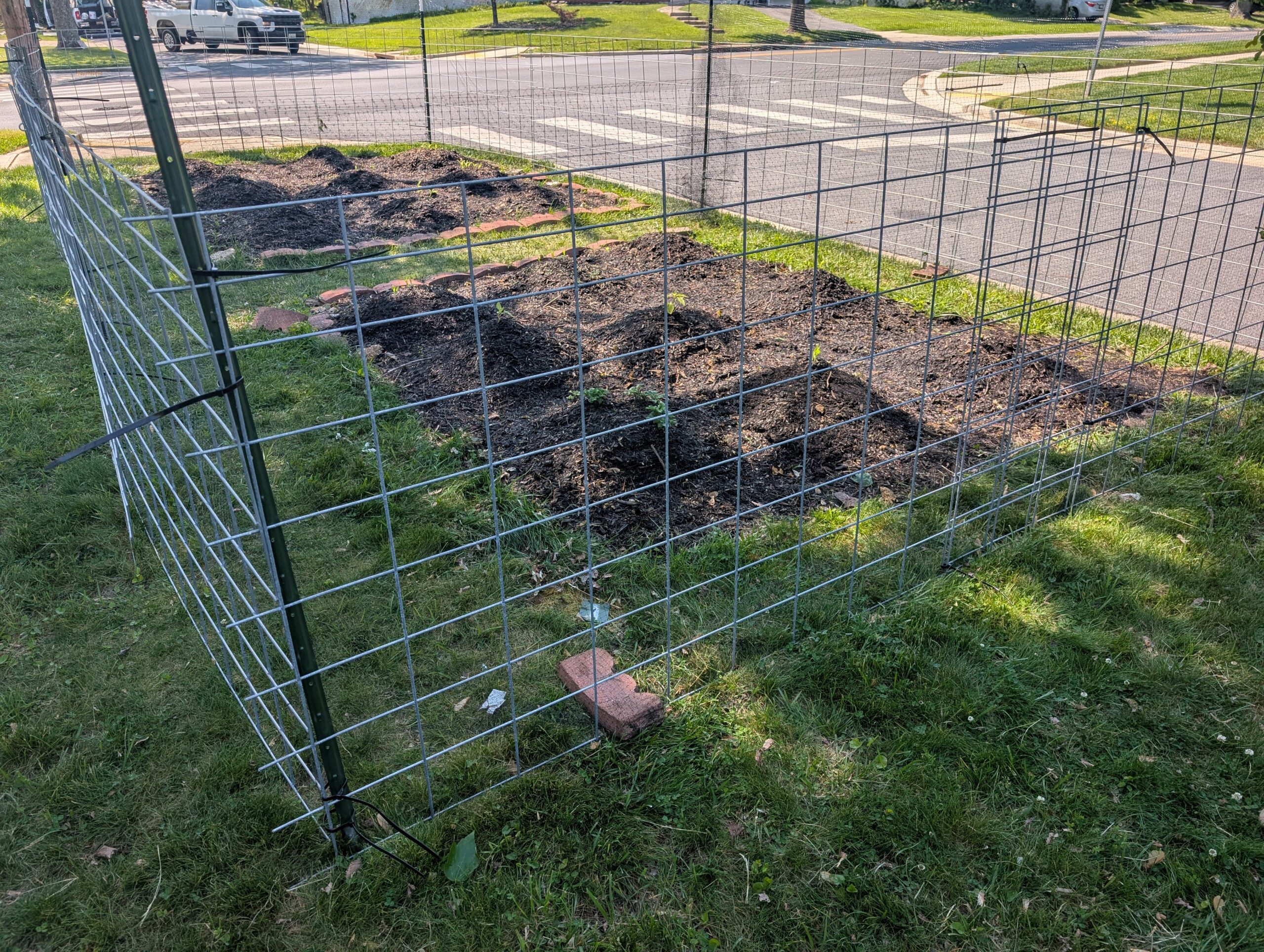
    The garden bed I designed for a client, two beds with nine mounds each instead of rows, surrounded by fencing.

    Choices in Garden Design

    This winter, I designed an annuals garden for a client. This spring, a small crew helped us bring that design to life. We turned compost, coco coir, cardboard, and oyster mushroom spawn into two square garden beds with nine mounds each. We chose to build soil instead of digging a bed. In a previous post, I discussed how no-till techniques benefit the soil (Byrne, 2026).

    We dedicated one bed to corn, squash and beans, and the other mainly to solanaceous (tomato family) crops. Both beds have oyster mushrooms. Intercropping, or growing multiple crops together at the same time, improves garden performance when done well (Byrne, 2026).

    I selected heirloom vegetable varieties for this garden design. My main criteria for recommendation are disease resistance, local adaptation, and days to harvest. I select varieties that can grow well together for intercropping.
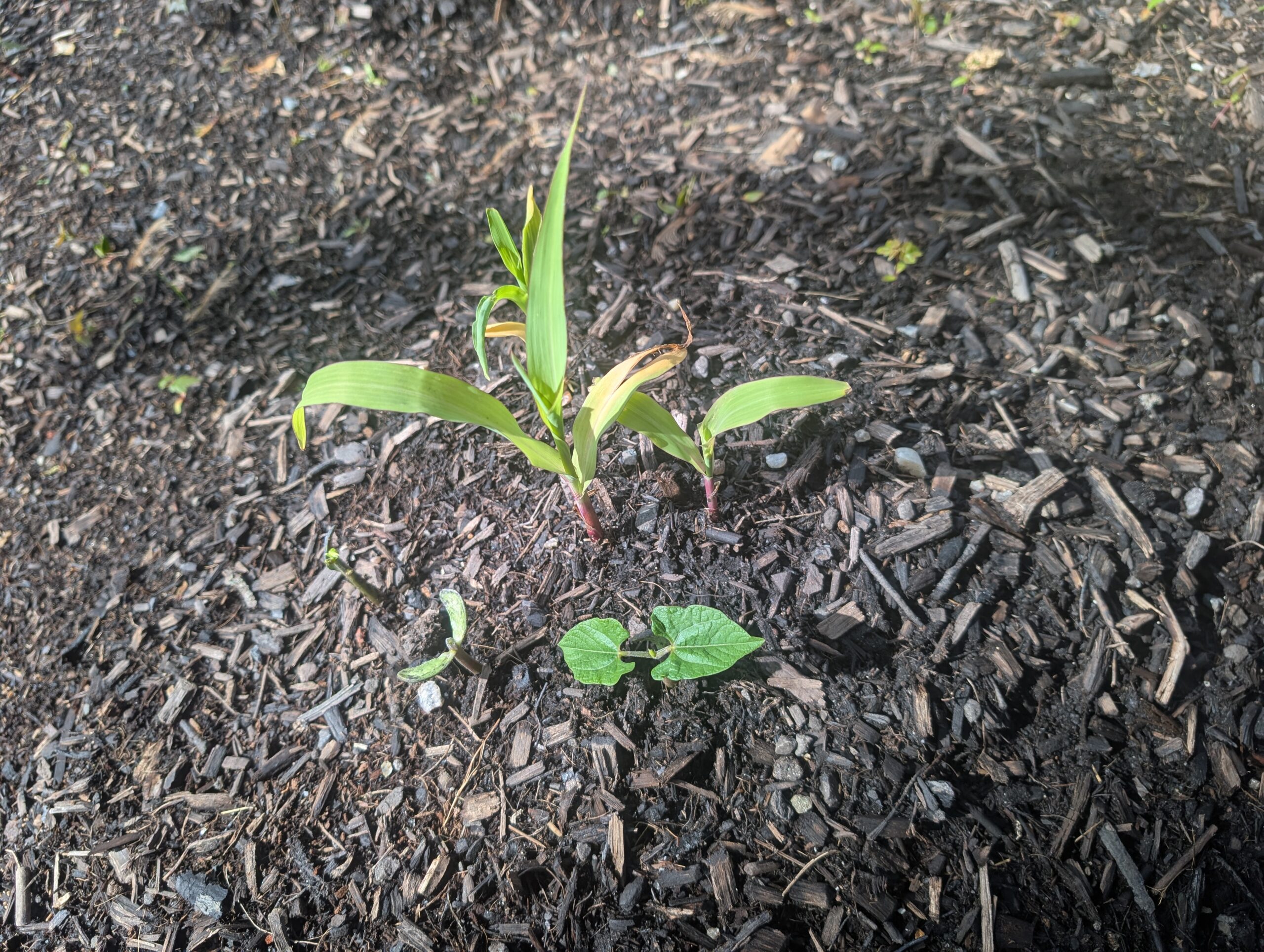
    Intercropping with corn and beans: corn seedlings with a bean seedling

    For example, I selected Pungo Creek butcher dent corn and Sacre Bleu pole beans (see picture above). Farmers in Eastern Shore Virginia have been growing Pungo Creek corn for about 165 years (Southern Exposure Seed Exchange, 2026). It grows tall, sturdy stalks. This will help it support Sacre Bleu pole bean vines. Lisa Bloodnick developed this disease and moisture tolerant bean in Apalachin, New York (Experimental Farm Network, 2026). We are a few states south, but appreciate a bean that doesn’t mind the east coast rain.

    I put similar thought into the mushrooms I selected. I chose Phoenix oysters (Pleurotus pulmonarius) because they grow here naturally and do well in garden beds (North Spore, 2026; Wikipedia, 2026). We installed the garden beds using layers of cardboard and compost mixed with oyster mushroom sawdust spawn.
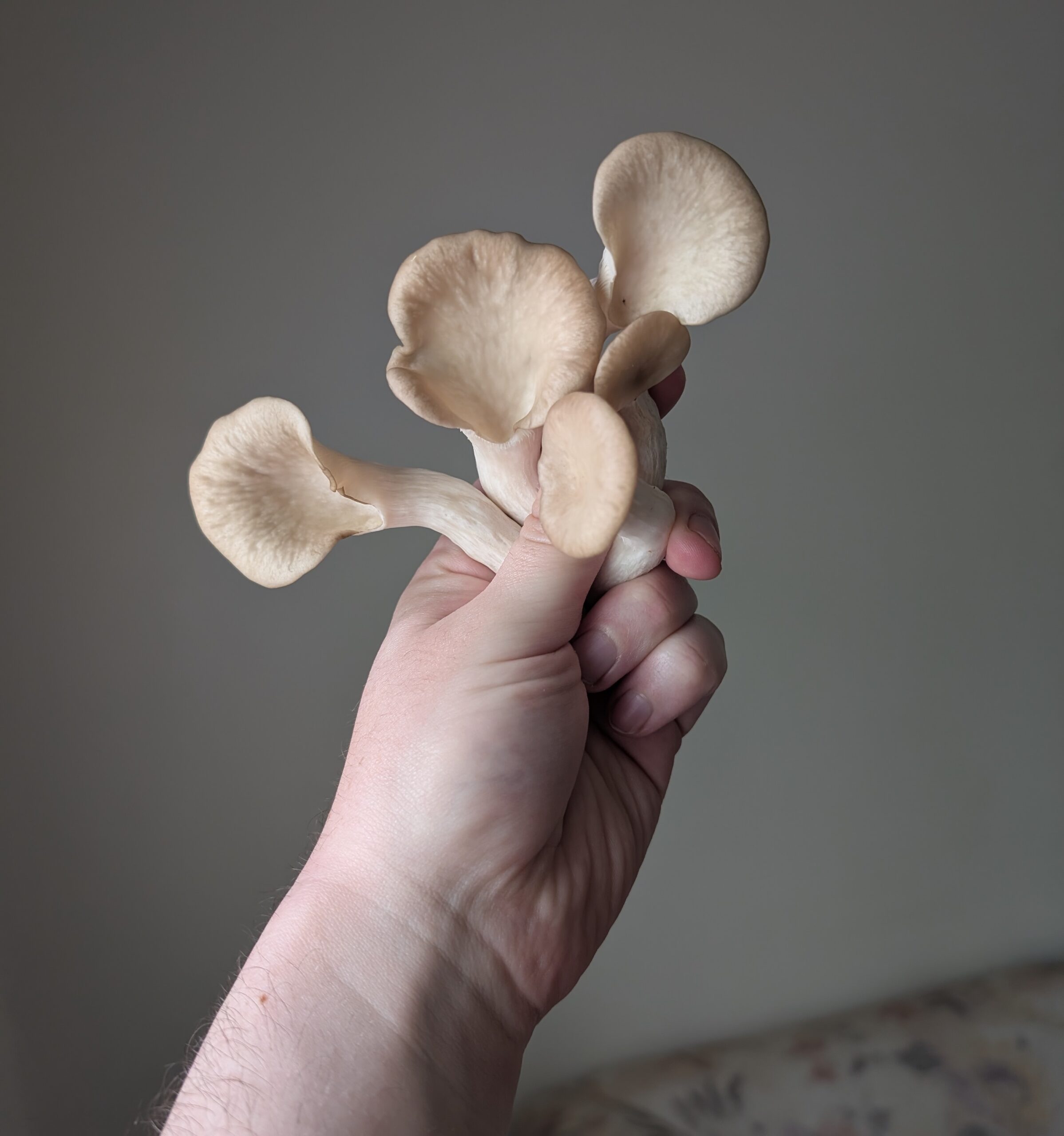
    Oyster mushrooms in hand

    Early results: looking good!

    The mycelium is hard at work eating up the cardboard. When I disturb the earth a little, I see and smell the mycelium. It smells like the best “clean linen” candle ever. The mushrooms will emerge from it later in the summer.

    Right now, corn, melon, squash, and bean seedlings dot the milpa garden hills. The corn takes the center, with the beans close by, and the cucurbit crops on the slope of the hill. The solanaceous crop bed is giving us more of a challenge. Rabbits LOVE pepper and tomato seedlings! Not a single pepper or tomato survived, but the potatoes did.
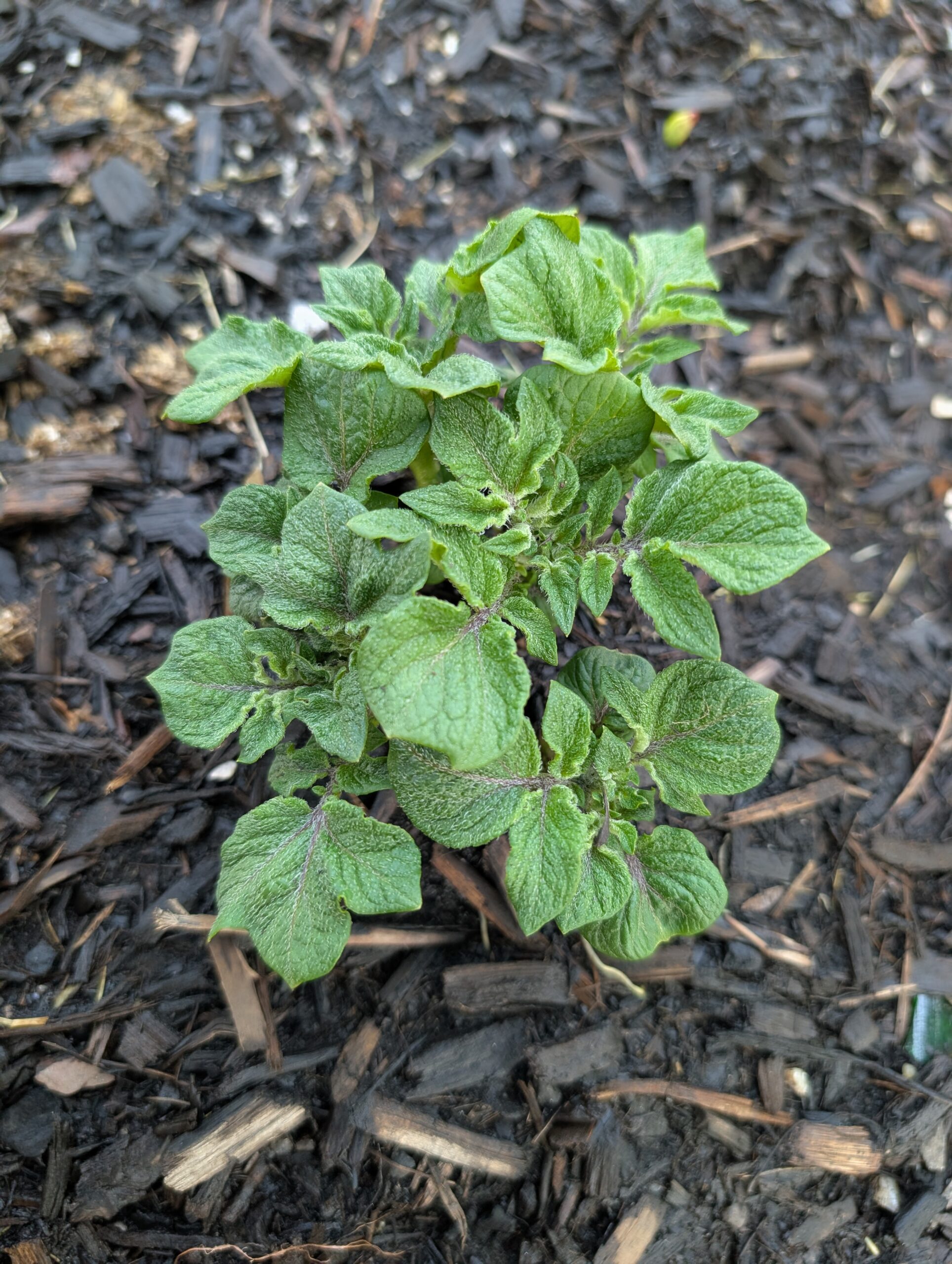
    Sarpo una potato plant growing in the garden

    Going forward, I will include fences in my designs with annual crop beds. We installed a fence with chicken wire, and re-planted the barren hills. It was too late in the season for more peppers or tomatoes, so we planted a little extra corn, herbs, radishes, turnips, and greens. Neighbors are stopping by to admire the yard. Everybody loves how this garden design is turning out!

    Abundance is possible when you appreciate interdependence, and roll with the changes nature throws at you! Happy spring, everyone!

    Bibliography

    Byrne, M. (2026, February 25). Eco landscapes: winter schemes for spring dreams! laueanagrowing.net. https://rainbowbranch.com/ecolandscape/

    Experimental Farm Network. 2026. ‘Sacre Bleu’ Bean. https://store.experimentalfarmnetwork.org/products/sacre-bleu-bean

    North Spore. 2026. How to Make Outdoor Mushroom Beds. https://northspore.com/pages/outdoor-mushroom-beds

    Southern Exposure Seed Exchange. 2026. Pungo Creek Butcher Dent Corn, 42 g . https://www.southernexposure.com/products/pungo-creek-butcher-dent-corn/

    Wikipedia. 2026. Pleurotus pulmonarius. https://en.wikipedia.org/wiki/Pleurotus_pulmonarius
  • Plant Review: Garden Vegetables (Part 3)

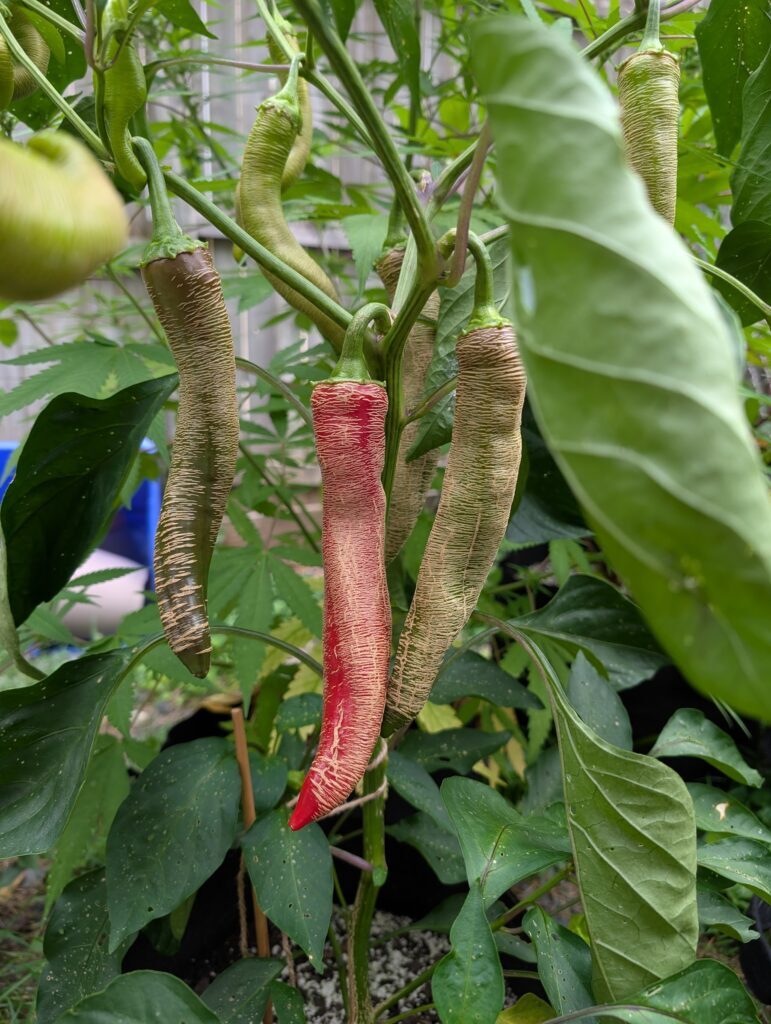
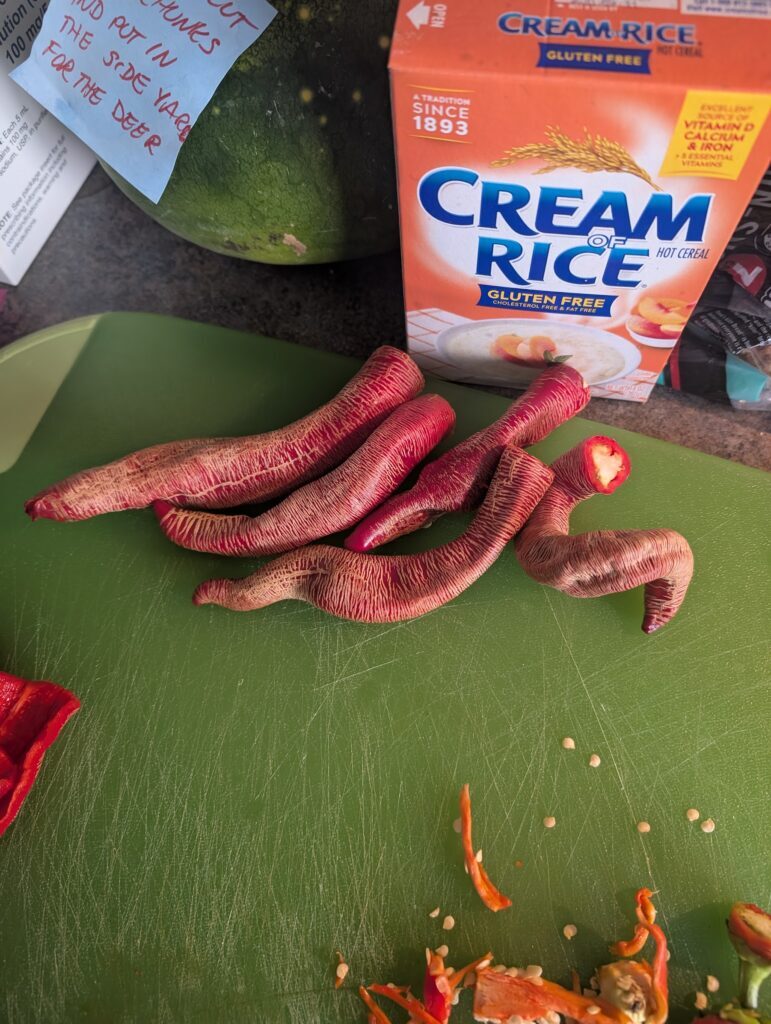
    Several Macedonian grilling peppers on a green cutting board. The peppers are red, long, and thin. Some are corkscrew shaped. They all have the classic rough-skinned scar stripes of the Macedonian grilling pepper. This is the defining characteristic of this heirloom pepper.

    Several Macedonian grilling peppers on a green cutting board

    Finally, the last plant review for my 2025 vegetable garden! Here I review the last two vegetables that I grew in my garden last summer: scorzonera, and Macedonian grilling peppers. I will give them a rating out of 5 in ease of growing, harvest yield, and harvest quality, and use this to calculate an overall score. I then explain why I ranked them the way I did, and decide if I will grow them again or not. In previous reviews, I covered:

    Review 1: Carwile’s Virginia Peanut, Thai red roselle, Stewart Zeebest okra, moon and stars yellow watermelon

    Review 2: Painted Lady runner beans, Suyo long cucumber

    Macedonian Grilling Pepper Review

    Macedonian grilling peppers growing on the plant. The mature pepper is long and red with characteristic banded scarification, unique to this type of pepper.

    Macedonian grilling peppers growing on the plant

    Garden Vegetable Review Score

    Overall: 4.5/5

    Ease of growing: 4/5

    Harvest yield: 4/5

    Harvest quality: 5/5

    Would I grow it again? YES!

    Explanation

    These peppers are forgiving, if you can keep the young plants away from the deer. Deer ate up most of my baby peppers. The one that survived was basically a tree. It had a thick, sturdy stalk which bore many elongated, red, scarred peppers.

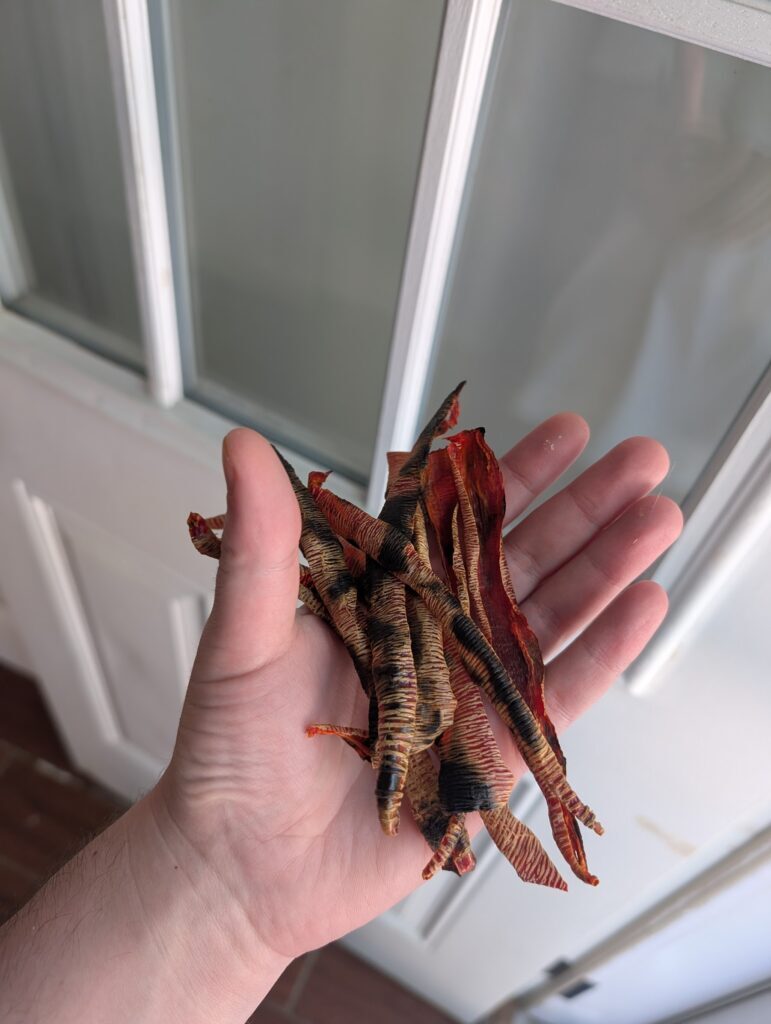
    Slivered, pan-seared, and dried Macedonian grilling pepper

    Slivered, pan-seared, and dried Macedonian grilling pepper

    Spicy Exchange describes these as about jalapeno heat, at the hottest. This was NOT accurate, to my opinion! It could be that this one plant was unusual, or didn’t like my fertilizer regime. It is also likely that I am personally more sensitive to spice than the author. It was far, far hotter than I expected!

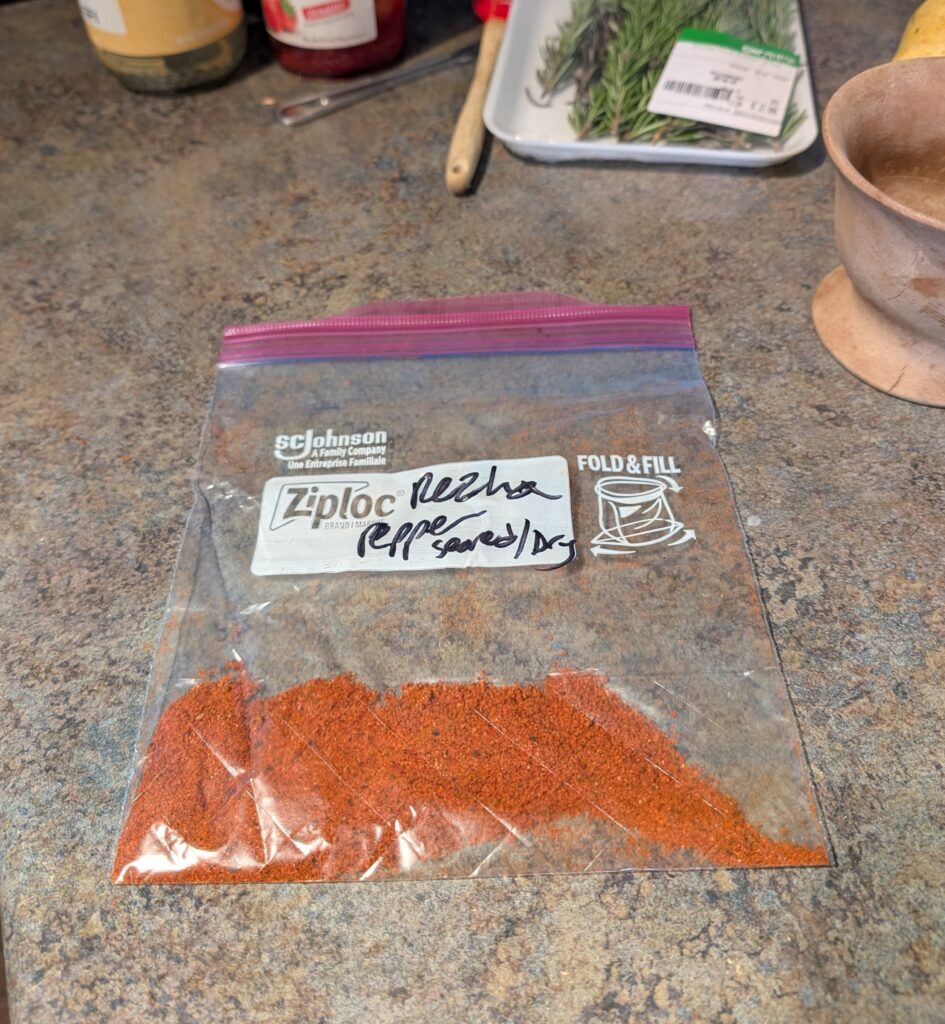
    It made the best paprika I’ve ever had when pan seared and dried. It was something between smoked paprika and hot red pepper powder. It’s easy to make.

    Cut the peppers lengthwise in half, and seed them. Pan-sear them until you think they look done. Dry them in the oven or air fryer at about 175 degrees for about 6 hours, checking frequently for moisture level. Take them out when they look done and grind them up.

    Smoky red paprika powder made from Macedonian grilling peppers. Delicious paprika! Hot and spicy. I review this type of pepper plant well.

    Smoky red paprika powder made from Macedonian grilling peppers

    It took every dish I put it in to the next level. If it was savory, it was getting the paprika treatment! I especially enjoyed making grits with this paprika, salt, pepper, and butter. I demolished the whole supply of hot-and-smoky red powder in no time!

    Scorzonera Review

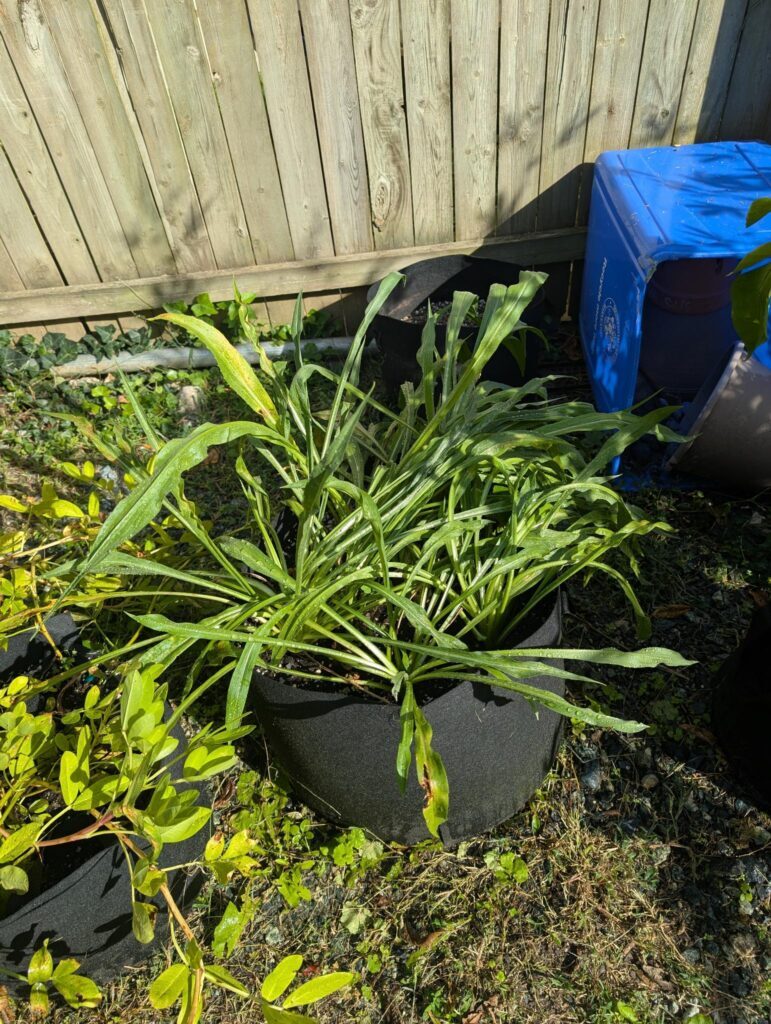
    Scorzonera growing in a 10 gallon cloth pot. Long, thin leaves in a rosette. There are about 5-7 plants in the pot each with a rosette. This plant grows easily.

    Scorzonera growing in a 10 gallon cloth pot

    Garden Vegetable Review Score

    Overall: 3.7/5

    Ease of growing: 5/5

    Harvest yield: 3/5

    Harvest quality: 3/5

    Would I grow it again? Maybe? Probably not.

    Explanation

    Scorzonera was very easy to grow. It does not ask for anything. Just give it a large enough pot to make roots, at least 10 gallons.

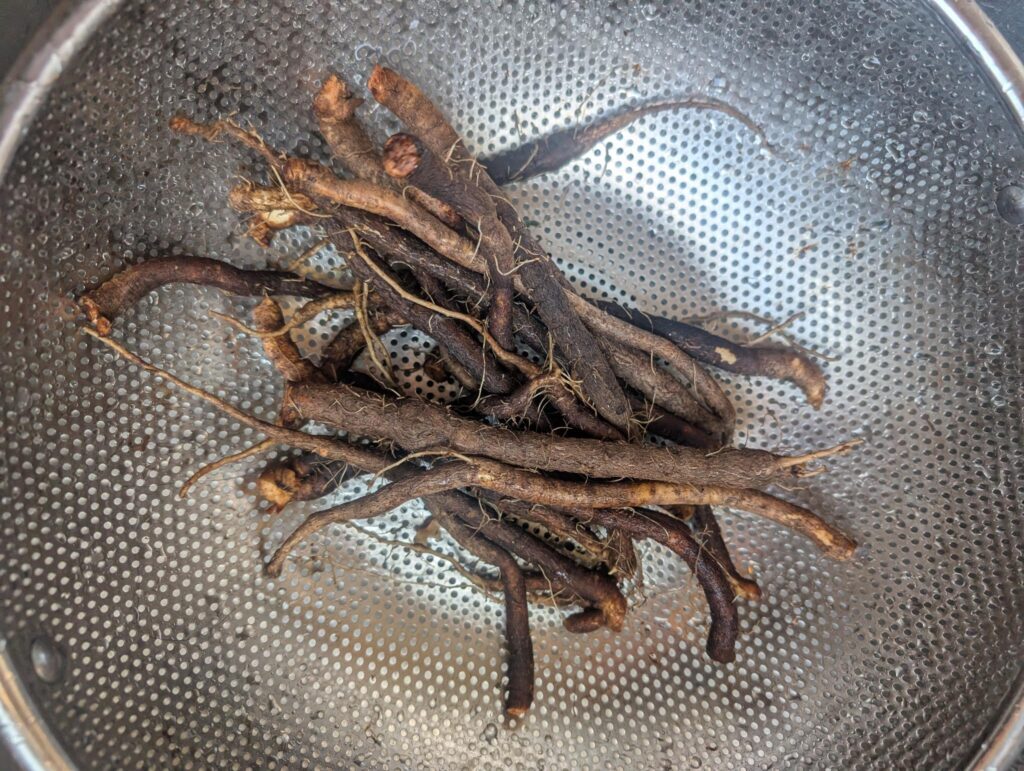
    I’m not sure how I feel about it. The roots have a black skin that needs peeling, and it is laborious to do. The interior is very thin. There is a woody core in the center of the root so you have to “de-bone” it. If you do not cook it first, it will leak latex. It tastes like artichokes or maybe mild seafood. The flavor is faint.

    It’s a novelty to me, and unbelievably easy to grow. But, I don’t really know if it’s worth the effort of cooking, or what to do with it. Its flavor is mild and pleasant. But, it’s not good enough to be worth dealing with the peeling. Oyster mushrooms taste much better and are also easy to grow. I don’t know if I could prepare it better than I did this time. I’m uncertain about growing it again, but leaning towards no.

    Scorzonera roots cut from the plant and in a strainer after being washed. Long, very thin Black Salsify roots covered in a rough black-brown-grey skin. Mild artichoke flavor, reviewed as bland.

    Scorzonera roots cut from the plant and in a strainer after being washed