ALL METHODS ARE EXPERIMENTAL IN NATURE AND CONTINUALLY REVISED AND UPDATED
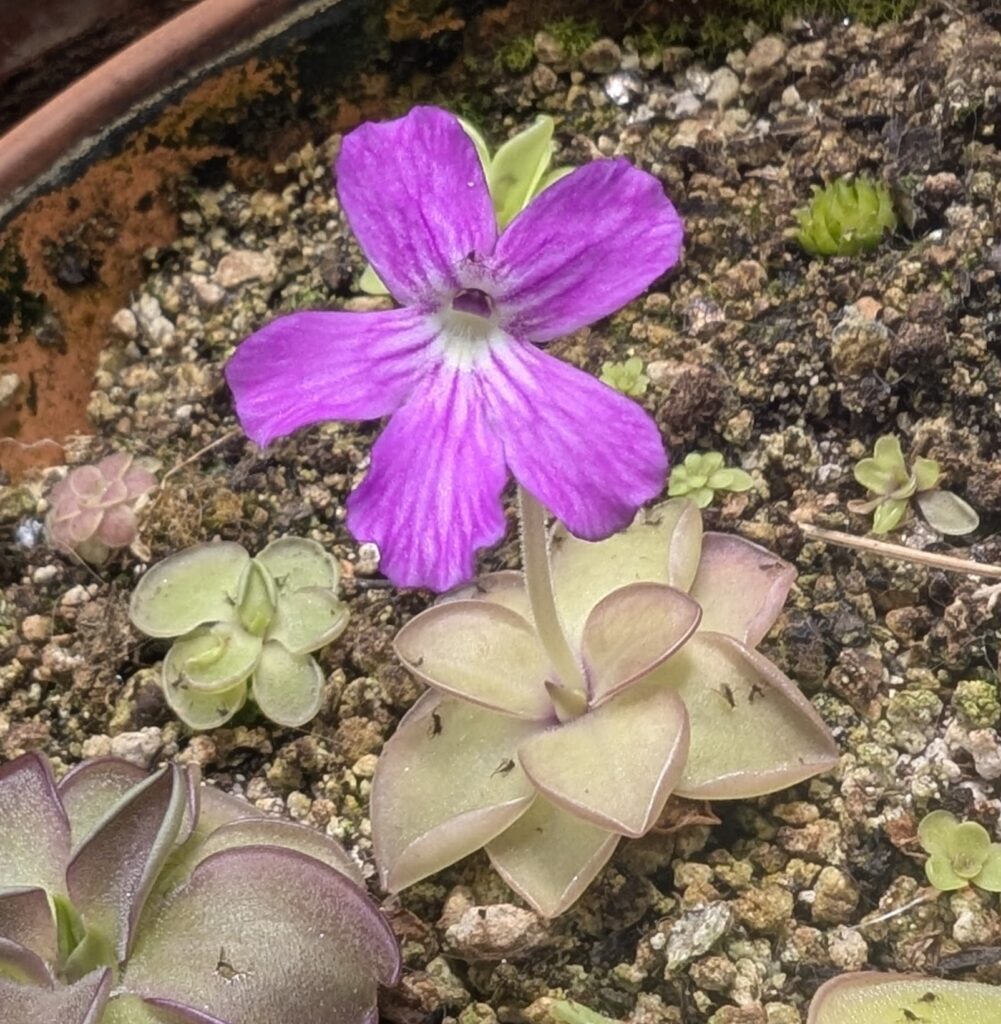
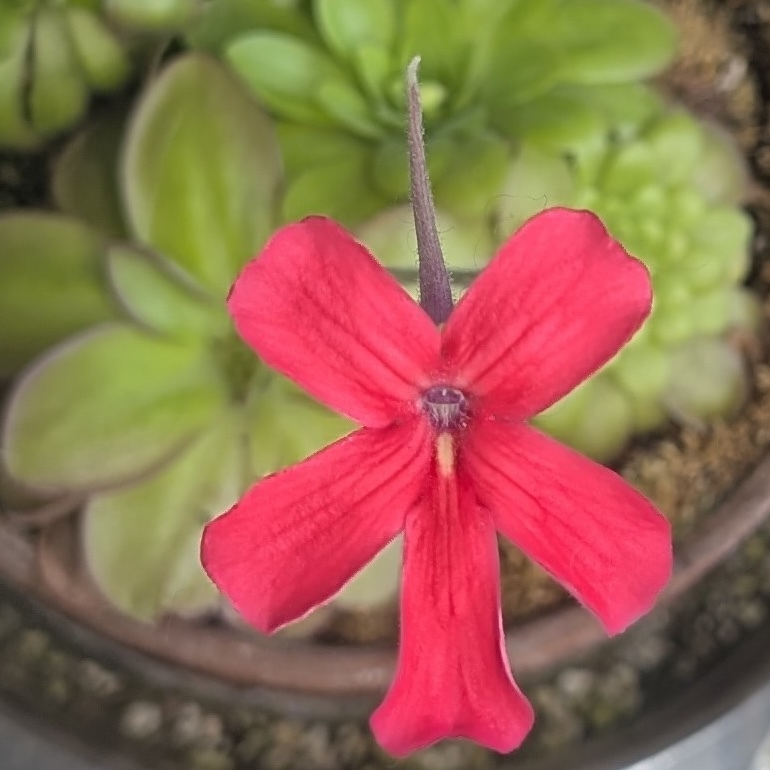
Pinguicula x “Taffeta” by Bramble’s Botanical’s (rectifolia x zecheri ‘Faulisi’)
Carnivorous Plant Tissue Culture Agar Agar Media Recipe (low plastic)
Here is how I create tissue culture media suitable for carnivorous plants while using as little single-use plastics as possible.
Adapted from Legendre, L., & Mallet, S. In Vitro Culture of Pinguicula and Drosera.
Supplies needed:
6 x 8oz mason jar containers
Pressure cooker
300mL distilled or RO water
0.2g MS Salt (Murashige and Skoog Basal Medium)(This is 1/4 the normal amount of MS salt for most plants)
9g sugar
3g agar agar powder
Boil the distilled water. Meanwhile, measure all dry ingredients. Add boiling water to a pressure cooker safe, lidded container of at least 450mL in volume. A 1qt mason jar is fine. Add all the water, then add the dry ingredients a little bit at a time, swirling in between. Swirl until the mixture is even. Pour equal amounts of the liquid agar mix into 8oz mason jars and cover with solid lids. Load the jars into a pressure cooker, and sterilize for 20 minutes at 15psi. Cooking time begins when the pressure vessel is pressurized, NOT when you turn on the burner! After sterilization, turn off the burner and allow the pressure cooker to depressurize naturally. Then, using heat proof gloves, take the agar containers out and place on a flat surface to cool. If you leave them in the pressure cooker, they will become slanted.
Tissue Culture Surface Sterilization and Inoculation Method
Supplies needed:
mason jars with tc media
jar opener or butter knife
rubbing alcohol
paper towel
explants
distilled water
sterile AND distilled water
NaDCC tablets
Erlenmeyer flask with vacuum arm and cork
Small lab vacuum and tubing
Flow hood or still air box
Plain unscented castille soap
Tweezers
Torch lighter or alcohol lamp
Choose your explants, or the pieces of the plant that you want to culture. Place them in a jar with distilled water and a few drops of unscented castille soap. Wash them by shaking, and rinse repeatedly with distilled water until there is no more soap. Prepare a 2000ppm NaDCC solution, and pour a small amount into a vacuum Erlenmeyer flask. Add a few drops of plain castille soap. Place your explants in the flask, cork the flask, attach to the vacuum with tubing, and turn on the lab vacuum. Shake gently for 8 minutes.
Now moving to a sterile environment (where we stay hereafter), drain the solution into a waste container while keeping the explants inside. Fill the flask with sterilized AND distilled water (you need to sterilize it after distilling it). Rinse the explants in the water by gently shaking for 5 minutes. Repeat the water rinse a total of 3 times. Clean your jar opener with alcohol, and open the prepared TC agar jar. With alcohol and flame sterilized tweezers, take your explants and place them onto the agar. Only place one explant in each jar. Clean the top of the jar lids with rubbing alcohol and a paper towel, then, flip the jar lids.